
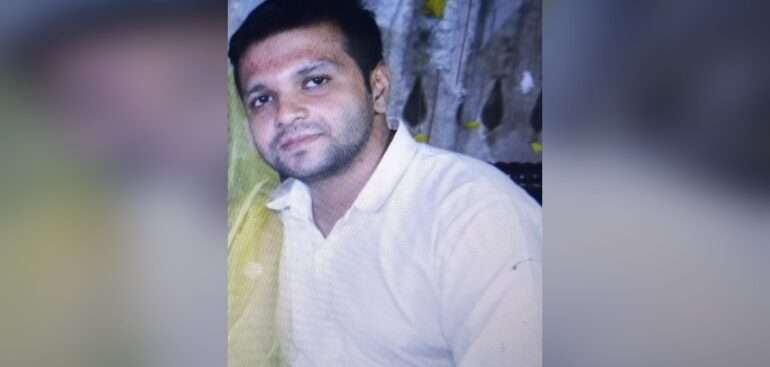
Before a court could hear the evidence against Samuel Arif, a crowd had already beaten him. The 26-year-old Christian man from Lahore is now in jail, accused of blasphemy. His family says the charge is false. Whatever the complaint’s merits, the attack on him demands scrutiny in its own right.
Police arrested Arif on 29 August 2026 after his neighbour, Muhammad Umair Alam Khan, accused him of approaching Khan’s two minor daughters in Punjab University Staff Colony the previous day. Khan alleged that Arif made offensive religious remarks, tried to put an unidentified substance on the girls’ faces and followed them. The complaint also mentioned CCTV, but the account available here does not establish what any footage shows.
As word spread, a crowd confronted Arif at a local gym. Reports say security guards and others beat him before police took him into custody. His family fears for his safety.
Police registered FIR No. 806/26 under Sections 295-C and 298-A of the Pakistan Penal Code. A conviction under Section 295-C carries the death penalty. A court later sent Arif to judicial remand, where he remained as of late September reporting. The allegations have not been proved in court.
Arif’s mother, Mukhtaran Bibi, says a personal dispute prompted a false accusation. Sohail Habel of HARDS Pakistan says he spoke with Arif, who denied committing blasphemy. Lawyers Kashif Alexander Rajput and Nadia Hameed have agreed to represent him. The complaint requires careful investigation, and Arif must be able to answer it. Neither the crowd’s anger nor his family’s denial establishes what happened.
The risk extends beyond this case. Human rights advocates have long warned that a blasphemy accusation in Pakistan can endanger someone before trial. Accounts citing thousands accused since 1987 and dozens killed outside the courts point to a climate in which an allegation alone can threaten a life. Religious minorities face particular fear when suspicion spreads faster than facts can be checked.
Police and courts must test the evidence, protect witnesses and ensure Arif can defend himself without intimidation. They must also investigate the beating. A fair process cannot stop at arresting the accused while those who attacked him escape scrutiny.
Arif’s future should depend on evidence and due process. His family’s immediate fear is that an unproved accusation has already made him unsafe.