
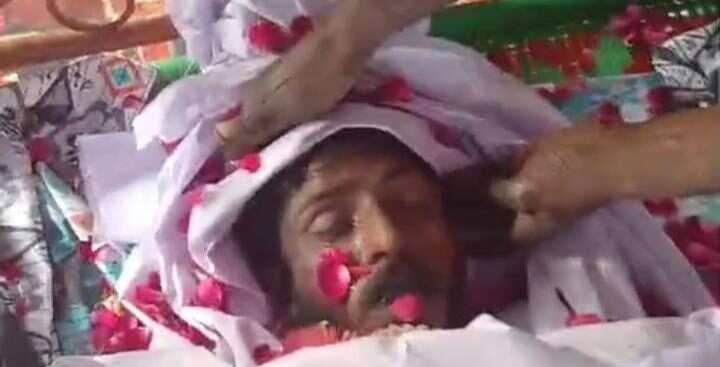
On the evening of March 3, 2026, the life of a young man, just 20 years old, was extinguished under harrowing circumstances in Sargodha, Pakistan. His name was Marqas Masih—a hardworking, unmarried Christian laborer who left home each morning carrying quiet hopes for a better tomorrow. By nightfall, those hopes were turned to ashes.
The news spread quickly: his employers claimed it was suicide. But when his family saw his body, their grief turned to horror. His skin bore burn marks, bruises, and wounds that spoke not of despair, but of torture. For them, it was not death by his own hand—it was murder.
In anguish and defiance, Marqas’s family and members of the local Christian community took to the streets. They laid his body on the main road of Markabad, halting traffic and demanding that the world look, that someone—anyone—listen. Their cries echoed through the night: “We want justice.” Police intervened, registering a case and making arrests, but weeks of fear and silence still enshrouded the truth of what had happened to him.
Those who knew Marqas insist this was not an isolated tragedy. They say he endured routine mistreatment from the landlords he worked for—Muslim men with power and influence far greater than his own. Now, his death has reopened old wounds in Pakistan’s rural Christian communities, where memories of exploitation and discrimination run deep.
For them, the violence against Marqas is a mirror reflecting a cruel reality: that faith and poverty remain dangerous in certain corners of their homeland. Christian families who labor under wealthy landlords often receive little more than food in return for their toil. Their voices are easily dismissed; their suffering rarely makes headlines.
Human rights defenders have called for a full, transparent investigation into Marqas’s death, demanding that justice be done—not only for one man, but for the countless others living under the shadow of fear. They warn that without accountability, every delay deepens the wound and every silence emboldens abusers.
Marqas’s funeral drew mourners from far and wide, from those who knew him personally to others who recognized in his story the struggle of an entire community. His coffin, carried through the dusty roads of Sargodha, became a symbol of a people’s pain and perseverance.
In his short life, Marqas had little power. But in death, he has ignited a movement, a plea to the conscience of a nation: that no one—no matter their faith, background, or station—should live or die as he did.
His memory now stands as both accusation and hope—a demand that Pakistan face its own reflection, and choose justice over silence.