
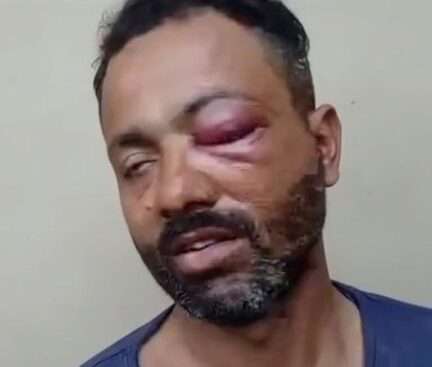
A wave of sorrow and outrage has swept through the Christian community of Gujranwala after a horrific assault on Yousaf Masih, a Christian sanitation worker serving under the Suthra Punjab program. In the quiet neighborhood of Francis Abad, UC No. 69, along Pasrur Road in Jandian Bagh Wala, an ordinary workday turned into a nightmare.
According to eyewitnesses, Yousaf was viciously attacked by four fruit vendors who struck him with a two‑kilogram iron weight—one typically used to balance scales in markets. The blow left him bleeding and fighting for his life. Those who rushed to his side describe a scene of chaos and fear—one more chapter in a long story of pain endured by many marginalized workers in Pakistan.
What makes this tragedy even harder to bear is that it could have been prevented. Reports reveal that the same individuals had previously harassed and verbally abused Yousaf’s supervisor. The warning signs were there, yet no one intervened. That silence allowed hatred to escalate into violence.
“This attack is not an isolated incident but a painful reflection of the daily discrimination, humiliation, and insecurity faced by Christian workers in Pakistan,” said Pastor Imran Amanat, a local faith leader. His words echo across the Christian quarters of Punjab, where countless workers, though performing essential labor that keeps cities clean and functioning, remain trapped in cycles of exclusion and fear—punished simply for who they are and what they believe.
For decades, Christians across the country have lived with the weight of economic hardship and social stigma. Many of them occupy the lowest rungs of public service—sanitation, cleaning, sewage maintenance—roles treated with disdain. Without proper legal protection or societal respect, they often bear the brunt of violence and exploitation. When the law fails to act quickly or fairly, it sends a dangerous message: that the weakest can be harmed without consequence.
Yousaf Masih’s family, devastated and afraid, has appealed directly to Chief Minister Maryam Nawaz for justice. Their plea is simple yet profound—protection, accountability, and dignity. They are not asking for special treatment, only the fairness that every citizen deserves under Pakistan’s own constitution.
Justice for Yousaf Masih is more than a courtroom matter; it is a test of conscience for a nation that prides itself on equality and compassion. His suffering is a reminder that faith should never determine one’s safety, and poverty should never define one’s worth.
As the community prays for Yousaf’s recovery, the call for justice grows louder. Every voice that rises against indifference brings hope that someday, no one in Pakistan—regardless of faith or status—will have to fear for their life while simply doing their job.