Pakistan stands at a moral crossroads as the Federal Constitutional Court prepares to hear the review petition in the case of 13‑year‑old Maria Shahbaz on July 24. At its heart, this is not only a legal battle over custody — it is a test of whether the country’s highest court will uphold its own laws and protect children from abuse, forced marriage, and coerced conversion.
A child trapped in a “Forced Marriage”
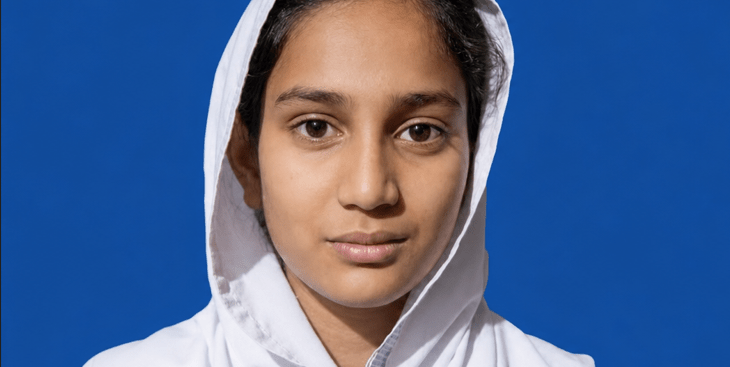
Maria’s story is brutally simple: a minor Christian girl, taken from her family, forced to renounce her faith, and “married” to a 30‑year‑old man, Shehryar Ahmad, who abducted her in July 2025. Since then, she has faced grave abuse and exploitation, cut off from her parents and the community that once offered her safety.
In February 2026, Pakistan’s Federal Constitutional Court returned her custody to her abductor, despite a prior investigation confirming she was underage and that the marriage certificate was forged. The court failed to verify her age, a basic requirement under Pakistani law, effectively validating a child marriage built on kidnapping, coercion, and fraud.
Law ignored, vulnerability exposed
Under Pakistani law and international standards, a minor cannot legally consent to marriage or religious conversion. The Child Marriage Restraint Act sets the legal age of marriage for girls at 18, and yet courts have often allowed forged documents and coerced “statements” to override this clear protection.
Maria’s case exposes a deeper wound: a justice system that, too often, sides with paperwork over lived reality, and with adult perpetrators over terrified children. When a court chooses to ignore a child’s age and the falsity of documents, it signals to abductors that the law is negotiable — and that impunity is possible.
Broader crisis of forced marriage and conversion
Maria is not alone. Every year, more than 1,000s underage girls in Pakistan are abducted, forcibly converted, and pushed into sham marriages. The pattern is chillingly consistent: kidnapping, fabricated marriage and conversion papers, and then reliance on those documents in court to keep the victim away from her family.
Local authorities are often complicit — slow to act, reluctant to challenge powerful perpetrators, or willing to accept forged documents at face value. For minority girls, particularly Christians and Hindus, this combination of societal pressure, institutional weakness, and judicial failure turns everyday life into a field of constant risk.
Punjab’s reform and international pressure
There are signs that parts of Pakistan are beginning to confront this crisis. Punjab, the country’s largest province, has passed the Punjab Child Marriage Restraint Act, explicitly setting 18 as the minimum age for marriage and instructing courts to prioritize the best interests of the child. On paper, this is progress; in practice, it will mean little unless judges apply these protections rigorously in cases like Maria’s.
Maria’s plight has also triggered international alarm. UN experts, members of the European Parliament, and lawmakers in the U.K. have all warned of a disturbing pattern of child abductions, forced conversions, and sham marriages targeting minority girls in Pakistan. The European Parliament has adopted a resolution explicitly calling for Maria’s return to her family and condemning the broader pattern of abuse.
Why this hearing matters
If the Federal Constitutional Court agrees to review Maria’s case and correct its previous ruling, it can set a precedent that strengthens protections against child marriage and coerced conversion across the country. If it refuses, it will send a stark message to thousands of vulnerable girls: that their age, their will, and their rights can be brushed aside when convenient.
At this critical moment, the question is not whether Pakistan’s laws are adequate on paper — it is whether its institutions, starting with the highest court, are willing to enforce them. For Maria, and for countless girls like her, the difference between enforcement and indifference is the difference between a life of abuse and a chance at safety.
As the Federal Constitutional Court convenes on 24 July, can Pakistan’s judiciary finally honor its own laws and give Maria the justice and life she deserves—or will it fail her, and us, yet again?