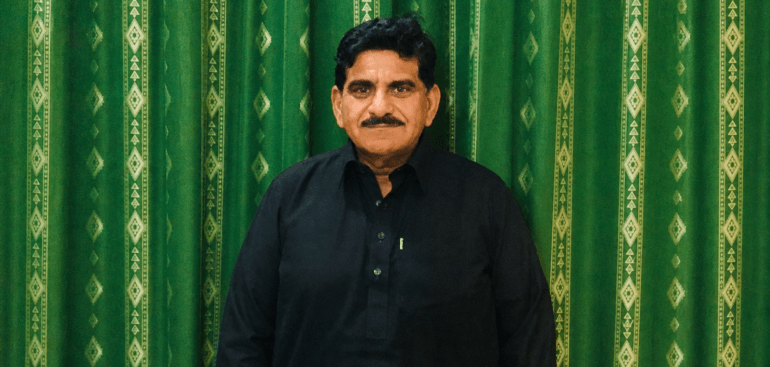
The killing of Mirza Safdar Mahmood in Mandi Bahauddin on September 2, 2026, is not an isolated tragedy. It is the predictable outcome of a country that has legally degraded, publicly vilified, and repeatedly failed to protect an entire religious community.
Mahmood, a 65-year-old local office-bearer of the Ahmadiyya community, was reportedly followed and shot near Kot Ahmad Shah, close to Eid Gah Gate, at around 6:30 p.m. He was travelling from his auto-repair workshop towards Bait-ul-Zikr, an Ahmadi place of worship, when unidentified attackers opened fire. He died at the scene.
He was not killed in a private dispute and had no known personal enmities. He was a husband, father of two sons, working man, and local community representative—yet attackers hunted him on his way to worship. His widow and sons now carry a grief that Pakistan’s authorities failed to prevent.
Police say they are investigating the targeted attack. But Pakistan’s Ahmadi citizens know these promises all too well: authorities announce investigations after blood has been spilled and issue condolences after families are broken, while ignoring threats, hate speeches, and organized intimidation until they end in murder.
Pakistan bears responsibility not only for failing to stop such violence, but also for creating the conditions in which it thrives.
Pakistan formally declared Ahmadis non-Muslims under its constitution in 1974. Since then, the state has imposed laws criminalizing essential aspects of their religious identity and worship. Ahmadis cannot freely call themselves Muslims, use Islamic religious language, or openly describe their houses of worship as mosques without risking prosecution. These are not minor restrictions; they are state-sanctioned humiliation designed to mark Ahmadis as outsiders in their own country.
A state that labels one community religiously suspect should not be surprised when extremists treat that community as disposable.
The Ahmadiyya community’s press release describes continuous hostility in Mandi Bahauddin. Clerics have reportedly issued public threats against Ahmadis, including appalling threats against pregnant Ahmadi women, while a targeted campaign has threatened to murder an Ahmadi police officer posted in the district. These are not simply “controversial speeches”; they are acts of incitement. When authorities tolerate and leave such threats unpunished, they turn them into invitations to violence.
Mahmood’s murder forms part of a wider pattern. Attackers murdered two Ahmadis in broad daylight in Saadullah Pur, Mandi Bahauddin, on June 8, 2024. The alleged killer of Ahmadi doctor Sheikh Muhammad Mahmood, murdered in Sargodha on May 16, 2025, reportedly remains free. These cases expose a brutal reality: Pakistan expects its Ahmadi citizens to live under threat while those who threaten or kill them often evade meaningful accountability.
Pakistan’s government cannot credibly speak of equal citizenship while it maintains a legal order that treats Ahmadis as second-class citizens. It cannot condemn sectarian murder while preserving laws that validate religious exclusion, nor claim to protect minorities while allowing hatred to spread openly in mosques, rallies, streets, and online spaces.
Mirza Safdar Mahmood deserved protection before attackers shot him—not sympathy after his death. Authorities must find and prosecute his killers, but justice cannot end with one investigation: they must also hold accountable those who incite violence, organize hate campaigns, and exploit religion to strip Ahmadis of dignity.
Until Pakistan dismantles the laws and institutions that legitimize anti-Ahmadi persecution, every new attack will remain more than a criminal act. Each will indict a state that has allowed prejudice to become policy—and policy to become a licence for persecution.