
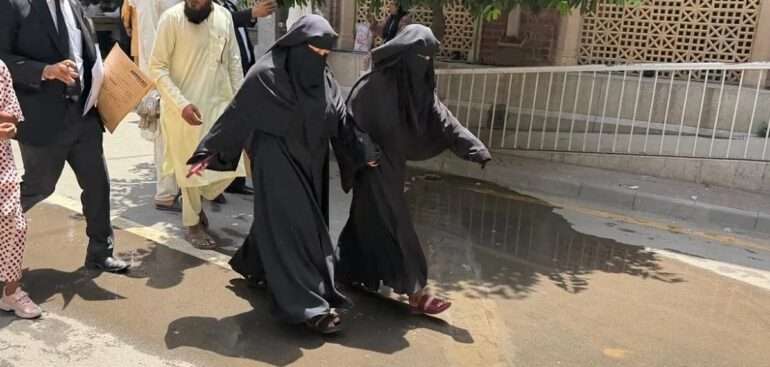
A bipartisan group of 11 U.S. lawmakers has urged Pakistan to protect the safety and rights of Neha Faqir, an 18-year-old Christian woman whose case has raised serious concerns about alleged abduction, religious coercion and failures in the justice system.
The lawmakers, led by Rep. Chris Smith, co-chair of the Tom Lantos Human Rights Commission, wrote to Pakistan’s Federal Minister for Law and Justice Azam Nazeer Tarar on August 20. They called for action to ensure that Faqir can speak freely, receive independent legal advice, and communicate privately with her family.
Faqir disappeared on March 24 after leaving home in Kot Radha Kishan, Punjab, to attend a sewing course. Her family says she did not return and later learned that she had been taken to a madrassa in Lahore. There, she was reportedly converted to Islam.
Her family disputes that the conversion was voluntary. They say Faqir had never expressed a wish to change her religion. They also allege that they faced pressure to withdraw their complaint after reporting her disappearance to police.
The case came before the Lahore High Court on June 9. Faqir’s family asked for her return and requested a private meeting with her. According to Christian Solidarity International, the court denied that request and dismissed the family’s petition.
This is the central concern in the case. A young woman whose freedom is in question should be able to speak privately with her family and an independent lawyer. Without that, it is difficult to know whether her statements reflect her own wishes or pressure from others.
The U.S. lawmakers made the same point in their letter. They urged Pakistani authorities to ensure Faqir’s physical safety and well-being. They also asked that she be given confidential access to legal counsel and allowed to communicate freely with her relatives.
They further called for any future court proceedings to take place without intimidation, undue influence or coercion.
Rep. Smith said the case raises “profoundly troubling questions” about Faqir’s safety, freedom of religion and ability to exercise her rights. He noted that Pakistan’s Constitution guarantees freedom of religion under Article 20 and equality before the law under Article 25.
However, constitutional guarantees have little value if religious minorities cannot rely on police protection, fair investigations and independent courts. The issue is not only what the law says. It is whether the state is willing and able to enforce it.
Faqir’s case is not isolated. Rights groups have long documented allegations of abduction, forced conversion and forced marriage involving Christian, Hindu and other minority women and girls in Pakistan.
A recent “Stolen Girls” report by Jubilee Campaign documented 210 alleged cases involving abduction, religious conversion, child marriage and sexual violence against minority girls between 2019 and 2025. Most cases were reported in Punjab. More than 83 percent of the victims were under 18.
These figures should concern Pakistani authorities. They point to a wider pattern in which poor families, minority communities and young women may struggle to access justice. Delays, weak policing and pressure on victims’ families can make that problem worse.
The government must respond with more than assurances. It should ensure an independent review of Faqir’s case, protect her from intimidation and allow her to meet privately with qualified counsel and her family. Authorities should also investigate the allegations surrounding her disappearance and conversion without bias.
Pakistan’s international credibility depends on whether it protects all citizens, including religious minorities. Neha Faqir’s case is now a test of that commitment