
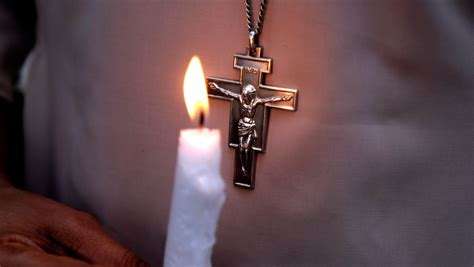
Kasur didn’t just wake up to a broken building — it woke up to a broken sense of safety.
Late Sunday night, Tak Memorial Church, in the village of Preme Nagar (Ganekey), near Raiwind, was vandalised in an act that feels less like “mischief” and more like a deliberate message: you are not safe, even in your place of prayer. The attacker didn’t stop at damaging property. He went for what people hold sacred. The church’s minaret was damaged, the cross was broken, and the Holy Bible was desecrated — not accidentally, not casually, but in a way that looks intended to humiliate an entire community.
For the local Christian families, this isn’t just a headline. It’s the kind of incident that turns ordinary nights into anxious ones — the kind that makes parents check locks twice, makes elders whisper fears they normally try to hide, and makes children learn, too early, what it means to be targeted for faith.
Police say the suspect has been arrested, and an investigation is underway to determine whether others were involved or whether an extremist group played a role. Additional security has been deployed in and around the church to prevent further incidents. Those steps matter — but they do not erase what has already been done.
Because the truth is bitter: a cross can be repaired, walls can be repainted, a minaret can be rebuilt — but the feeling of being hunted doesn’t disappear with an arrest.
This attack wasn’t only against bricks and wood. It was an assault on the most basic promise a state owes its citizens: the right to worship without fear. Every time a place of worship is violated, it doesn’t just injure one community — it chips away at the idea that people of different faiths can live with equal dignity. And when the sacred book of a minority is desecrated, it sends a chilling signal that their sacredness is considered disposable.
Local leaders and community members condemned the vandalism as a violation of religious respect, peace, and tolerance. Political representatives and community figures visited the church to express solidarity, while families in Preme Nagar wrestled with a painful mix of emotions: fear, anger, grief — and stubborn resilience. Many say they will continue to practice their faith, not because they are unafraid, but because surrendering would mean letting hatred win.
Yet it would be dishonest to treat this as just a one-off act and move on. Even when an incident is described as “isolated,” it lands in a countrywide reality where religious minorities have repeatedly faced intimidation, violence, and collective punishment — sometimes triggered by blasphemy allegations, sometimes by mob frenzy, sometimes by extremist incitement. In that context, an attack on a church is not simply vandalism. It is part of a pattern that forces minority communities to live as if normal life can be interrupted at any moment — by a rumour, by a threat, by a crowd, by one person with hate in his hands.
If Pakistan wants to prove this nation belongs equally to all its citizens, then justice cannot be symbolic. It must be visible, consistent, and uncompromising:
- Identify whether the attacker had support, handlers, or ideological backing.
- Prosecute the case transparently, not quietly.
- Protect churches and minority neighbourhoods not just after an outrage, but before the next one.
- Hold accountable anyone who incites religious hatred, online or on the street.
Because minorities should not have to earn safety by being “patient,” “quiet,” or “resilient.” They deserve safety because they are citizens — full stop.
And for the families of Preme Nagar, the demand is simple and human: let us pray without being punished for it.