
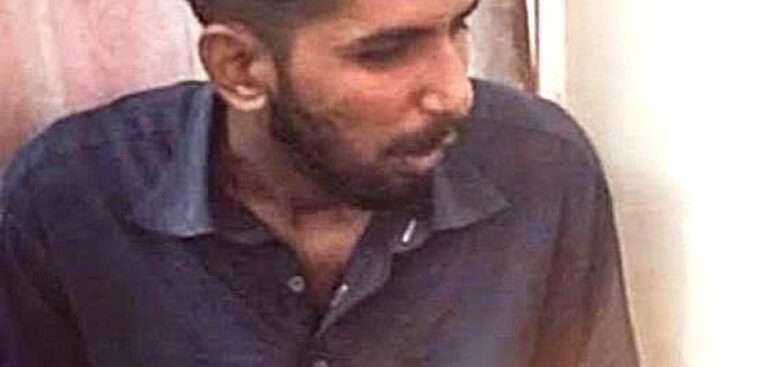
Shahzad Masih was just 16 when Pakistani police arrested him for allegedly repeating someone else’s words. More than nine years later, he remains in prison under a death sentence, waiting for his appeal to be heard.
His case raises a basic question: why has a man facing death waited years for a court to review his conviction?
The American Center for Law and Justice (ACLJ), working through its Pakistani affiliate, the Organization for Legal Aid, has called for his release. United Nations experts have also condemned his detention. Yet he remains behind bars.
A conversation that led to a death sentence
Masih worked at a hospital in Punjab. According to the ACLJ, a Muslim coworker asked him about his Christian beliefs. During the conversation, Masih repeated offensive remarks allegedly made by a Muslim acquaintance of his father.
Members of a religious organization later confronted him. Masih reportedly explained that the words were not his own. Police nevertheless arrested him on July 13, 2017, and charged him under Section 295-C, which carries the death penalty for derogatory remarks about the Prophet Muhammad.
The ACLJ says even prosecution witnesses acknowledged that Masih was recounting another person’s remarks. Despite this, a trial court sentenced him to death on November 22, 2022, after more than five years of proceedings.
His lawyers appealed days later. They say the appeal still awaits a hearing, despite at least four requests to have it heard sooner.
For Masih and his family, that delay means more years of separation, uncertainty and fear.
U.N. findings, but no freedom
In Opinion No. 65/2023, the U.N. Working Group on Arbitrary Detention found that Masih’s imprisonment violated international human rights standards, according to the ACLJ. It called for his immediate release, compensation and an independent investigation.
The group also raised concerns about discrimination and an unfair trial.
His age makes the case especially troubling. The ACLJ says the trial court refused to treat him as a juvenile despite his government-issued birth certificate. Authorities also reportedly questioned him without a lawyer during the early stages of his detention.
These are not minor procedural issues. They concern the basic protections owed to anyone accused of a crime—especially a child facing a possible death sentence.
Yet the U.N. findings have not secured his release or ended the wait for his appeal.
The damage cannot be undone
Other cases show the human cost of prolonged detention under Pakistan’s blasphemy laws.
Dennis Albert and Nadeem Masih were acquitted after spending more than two years and 10 months in prison, respectively. Their cases involved serious weaknesses or insufficient prosecution evidence.
Amir Peter never lived to see a verdict. The 61-year-old, who had advanced dementia, died in custody while awaiting trial. His advocates alleged that he did not receive adequate medical care.
An acquittal cannot give someone back the years spent in prison. It cannot bring back someone who died waiting for trial.
Pakistan has not carried out a state execution for blasphemy. But that does not erase the harm caused by imprisonment, death sentences, mob violence and extrajudicial killings.
Pakistan’s authorities must answer
Masih deserves an immediate appeal hearing and a meaningful response to the U.N. findings. His age at arrest, the evidence against him and the alleged denial of his rights must be properly examined.
Pakistan’s authorities cannot hide behind court procedures while a man spends year after year under a death sentence. A justice system that cannot promptly review such a conviction is failing at one of its most basic duties.
This case demands more than another postponement or another promise. It demands accountability—from the police who investigated it, the prosecutors who pursued it and the courts responsible for reviewing it.
Arrested as a child, sentenced to death as a young man and still waiting to have his appeal heard: Masih’s ordeal is an indictment of the system holding him. Pakistan’s authorities should be defending fundamental rights, not leaving a prisoner to lose his life one year at a time.