
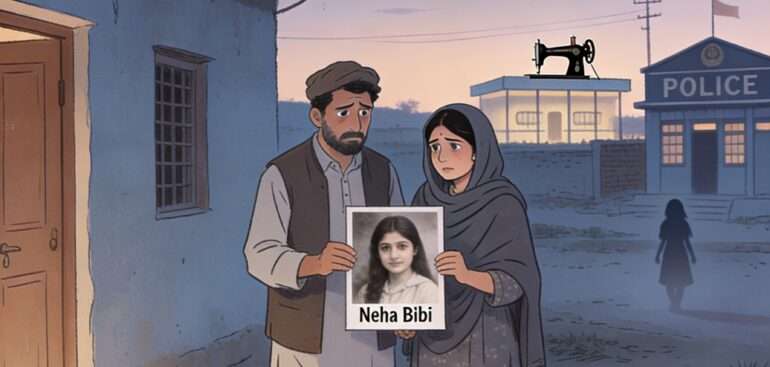
In the quiet, dusty lanes of Handaal village near Kot Radha Kishan, grief has found a home in the heart of one Christian family. Faqeer Masih, a humble brick kiln worker, spends his days searching for answers—clinging to hope and prayer as his 16-year-old daughter, Neha Bibi, remains lost to him.
Neha, gentle and bright, had been attending sewing classes at a local center run by the wives of a Muslim prayer leader, Sajid Ibrahim. On March 24, she left home with her sewing kit and dreams of independence. She never came back.
Days turned into torment. Her father’s pleas at the center were met with empty assurances. When the family turned to the police—their only refuge in desperation—they found indifference instead of empathy. Officers delayed registering a complaint, refusing to see a father’s agony as urgent. By the time an FIR was filed, Ibrahim and his wives had vanished.
For Masih, the truth came like a blow. Police later told him Neha had appeared before a court in Lahore, declaring she had “voluntarily converted to Islam.” But the father’s trembling voice says what his heart knows: his child was coerced, possibly married off under the guise of conversion.
“We were devastated,” he said. “She’s just sixteen. How can this be called free will? They took advantage of her innocence.”
His words echo through the wider Christian community in Punjab—each sentence a reflection of shared fear and injustice. For families living on the margins, stories like Neha’s are not rare—they are reminders of vulnerability woven into the fabric of poverty and faith.
Provincial lawmaker Ejaz Alam Augustine visited the family, urging authorities to act swiftly. He pressed the police, demanding Neha’s recovery under the new Punjab Child Marriage Restraint Ordinance 2026, which sets the legal marriage age at 18 and treats child marriage as a criminal act. Under this law, perpetrators can face up to seven years in prison—a promise of justice that feels painfully distant for Masih and his wife.
Yet the hope persists. Augustine and other advocates believe Neha’s case could become a turning point, forcing officials to enforce Pakistan’s child protection laws more rigorously and to confront the growing crisis of forced conversions.
In recent months, Christian and Hindu girls from impoverished families have disappeared under similar circumstances, only to resurface claiming conversion and marriage—often under duress. A February court ruling in the case of 13-year-old Maria Shahbaz, whose marriage to a Muslim man was upheld despite signs of abduction, still haunts minority parents across the country.
Lawmakers are now debating a bill to criminalize forced conversions, distinguishing faith freely chosen from faith imposed through fear or manipulation. But the passage remains uncertain in a nation where religious politics often eclipse human rights.
For now, Faqeer Masih waits. His days begin with prayer and end with the same unanswered question—a question carried by countless others across Punjab: When will justice come for Neha?
She was only sixteen—just a child with a needle, thread, and hope for a better life. In the silence of her absence, her father’s cry rings out not only for his daughter but for every girl who has lost her freedom in the shadows of injustice.