
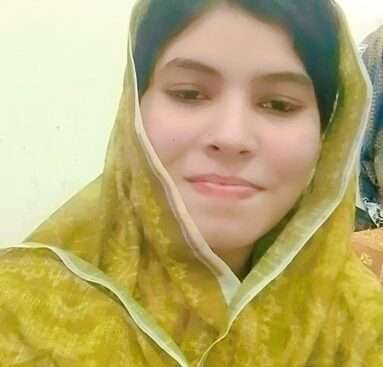
A quiet farming village in Pakistan’s Punjab has become the center of a family’s unending nightmare—a story marked by fear, helplessness, and a desperate search for justice.
Liaqat Masih still remembers the day his world fell apart. On April 3, while he and his wife labored in the fields to provide for their seven children, their 16-year-old daughter, Jia Liaqat, vanished from their home in Chak No. 505/WB, Burewala. What began as confusion quickly turned into panic.
“We came home, and she was gone,” Masih recalled, his voice heavy with grief. “Since that moment, our lives have not been the same.”
The family rushed to file a First Information Report (FIR) the same day, pleading with police to act swiftly. But according to Masih, their cries for help were met with silence.
Days passed with no answers—until April 8, when the family received a chilling WhatsApp call. A man identifying himself as Sohail Riaz claimed Jia was in his custody. His message was not just information—it was a warning.
“He told us not to pursue the case,” Masih said. “Imagine hearing that as a father… knowing your child is somewhere unknown, and you’re being told to stay quiet.”
The family immediately shared the number with the police. But again, they say, nothing meaningful was done. Later, they discovered that Riaz was living in Dubai and that Jia had allegedly been taken by his relatives on his instructions.
What followed only deepened their anguish.
Masih believes his daughter was targeted online—groomed through social media, manipulated with promises, and ultimately trapped. Police later informed the family that Jia had converted to Islam and entered into an online marriage with Riaz on April 15.
For Masih, the claim feels impossible to accept.
“My daughter is a minor,” he said. “She cannot make such decisions. This is not her choice—this is coercion.”
Instead of answers, the family says they faced hostility. After filing a complaint against police inaction, Masih describes being misled, ignored, and treated with increasing aggression.
“One day, they told me to go to Gujarat for a raid. I waited for hours—no one came. Then they sent me to another city. It felt like they were playing with us,” he said.
Then came another devastating blow.
On May 4, the family learned—without warning—that Jia had appeared before a magistrate. There, she reportedly stated she was an adult, had converted willingly, and had married of her own free will.
Her parents were not present. They were not informed. They were not given a chance to speak.
“It broke us,” Masih said quietly. “How can justice happen when the family is not even allowed to stand beside their child?”
Following her statement, police released two suspects they had briefly detained. Now, the family fears the case itself may be erased.
Each passing day brings new anxiety.
“We don’t know what she is going through,” Masih said. “We don’t know if she is safe. Every night, we wonder if we will ever see her again.”
Rights activist Albert Patras, who is assisting the family, says the case raises serious legal and moral questions.
“A minor cannot legally marry,” he emphasized. “There are clear procedures that must be followed—verification of age, presence of guardians, and legal counsel. None of this appears to have happened.”
He also pointed to troubling allegations against the police, including inaction, intimidation, and attempts to weaken the family’s complaint.
“The law exists,” Patras said, “but it means nothing if it is not enforced.”
Punjab recently raised the legal marriage age of marriage to 18, introducing stricter penalties for child marriage. Yet cases like Jia’s highlight a painful gap between law and reality.
Courts in Pakistan have increasingly questioned the reliability of official records in such cases, acknowledging that documents can be manipulated. Still, controversial rulings continue to emerge—like that of a 13-year-old Christian girl whose marriage to an adult man was upheld despite similar allegations of coercion.
For Masih and his family, these broader legal debates offer little comfort.
Their fight is deeply personal.
“We are poor,” he said. “We are from a minority community. It feels like our voices do not matter.”
Yet they are not giving up. With the help of legal advocates, the family plans to challenge the magistrate’s decision in the high court, hoping someone, somewhere, will listen.
Until then, their home remains filled with absence—a daughter’s space, a mother’s unanswered prayers, and a father’s relentless fear.
“We just want her back,” Masih said. “We just want justice.”