
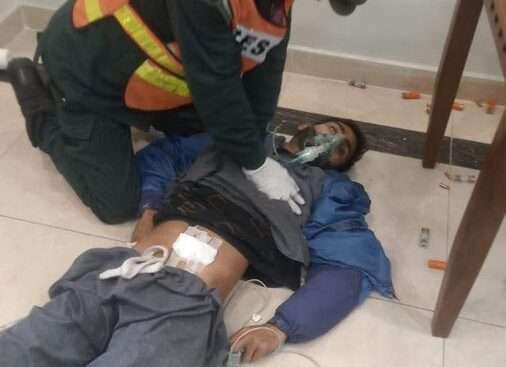
Late on a quiet Friday night in Lahore, tragedy struck within the walls of the Punjab Assembly’s MPA Hostel. Naveed Masih, a Christian sanitary worker known for his dedication and kindness, was found dead, fatally shot inside a legislator’s room. His untimely death rippled across Pakistan, igniting grief, outrage, and an urgent demand for justice.
Authorities reported that Naveed’s body was discovered in a room associated with provincial legislator Sabtain Shah. The news spread swiftly, leaving his family, friends, and colleagues in shock. Investigators are examining every detail—whether the incident was a suicide, an accident, or a calculated act of violence. Each possibility paints a grim picture of a man’s final moments in a place where he should have been safe.
According to early reports, Naveed had been called by a coworker, Ali Haider, and others to clean the room hours before he was found dead. Questions now surround this interaction—what truly happened inside those walls, and why? Some accounts suggest that faith-based tension and jealousy may have played a role. Allegations have even surfaced that blood stains were hastily cleaned, an act that, if true, could point to something darker—a deliberate attempt to conceal the truth.
Amid the confusion and speculation, there is one undeniable fact: a family has been shattered. Naveed Masih leaves behind a young child, and his wife, who is expecting another, now faces a future marked by grief and uncertainty. The image of a father taken too soon—just months away from welcoming new life into his home—has stirred heartbreak throughout the community.
His funeral, held with Christian rites, drew mourners from near and far. Many wept not only for Naveed himself but for what his death symbolizes—the persistent vulnerability of Pakistan’s religious minorities. Christians across the country continue to face the invisible weight of discrimination, fear, and inequality. For many, Naveed’s death feels like a cruel reminder of how fragile safety can be for those who serve quietly, unseen, yet faithfully.
Community and human rights advocates have condemned the killing, calling for transparency and swift accountability. Their voices echo a shared sentiment: that justice for Naveed is not simply about one man—it is about the collective fight for equality, dignity, and hope. To let this case fade into silence would be to betray every promise of justice made to those who still believe in the goodness of the law.
As investigators piece together the truth, Pakistan watches. For Naveed’s grieving family, and for countless others who live under the shadow of intolerance, this case carries immense weight. It is a test of conscience—a chance to prove that justice in Pakistan does not depend on faith, class, or status, but on humanity itself.