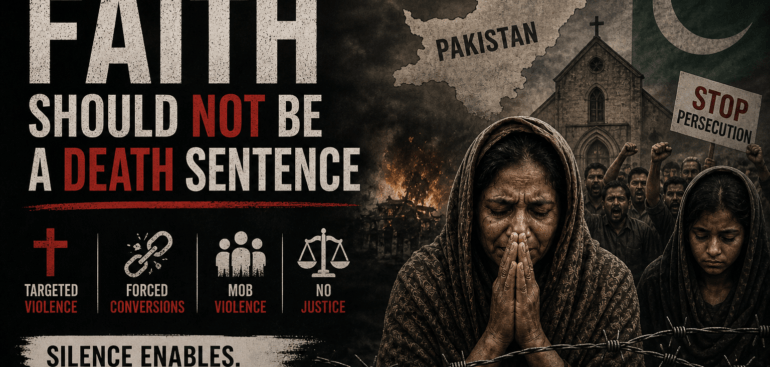
The steady escalation of persecution against religious minorities in Pakistan is no longer a quiet crisis—it is a glaring indictment of both national failure and global indifference. Year after year, reports repeat the same grim pattern: targeted violence, systemic discrimination, and a justice system that too often turns away from those most in need of protection. Yet the situation continues to deteriorate.
The latest findings from the U.S. Commission on International Religious Freedom reinforce what many have long known: Pakistan remains a place where faith can become a fatal liability. Its continued designation as a Country of Particular Concern is not merely bureaucratic language—it is a reflection of lived fear, shattered families, and silenced voices.
Behind the statistics are human stories that demand attention. Pastors like Kamran Salamat did not die in abstraction; they died serving communities that cling to hope in the face of relentless hostility. Their sacrifice underscores a painful truth: in Pakistan, practicing one’s faith openly can come at the ultimate cost.
Even more disturbing is the pattern of forced conversions and marriages involving Christian girls, some barely in their teens. These are not isolated incidents—they form a recurring narrative of abduction, coercion, and legal erasure. Families are left powerless, often receiving nothing more than an official declaration that their daughter now belongs to another faith and another household. The emotional devastation is immeasurable: parents grieving children who are still alive, yet irretrievably taken.
Layered onto this is the ever-present threat of mob violence. Accusations—often unverified—can ignite collective fury within hours. Entire communities live under the shadow of sudden unrest, where a rumor can become a death sentence. The normalization of such vigilante justice reflects a deeper societal fracture, where rule of law is overshadowed by fear and fanaticism.
And yet, within this darkness, there are flickers of resistance. Not all voices in Pakistan support such extremism. Many moderate Muslims, activists, and local advocates reject these abuses, and some have risked their own safety to speak out. Their courage is significant, but it cannot substitute for systemic change.
This is where the international community faces a moral test. Designations like CPC must not remain symbolic gestures. If they are to carry weight, they must be accompanied by sustained diplomatic pressure, accountability measures, and tangible support for vulnerable communities. Silence, or worse, passive acknowledgment, only emboldens those who perpetuate these injustices.
At the heart of this crisis lies a profound human struggle—the desire to live, to believe, and to belong without fear. The resilience of Pakistan’s Christian community is remarkable, but resilience should not be mistaken for acceptance. No community should have to endure persecution as a condition of existence.
The question is no longer whether the world is aware. It is whether it is willing to act.
Until meaningful pressure is applied and protections are enforced, the cycle will continue: another report, another tragedy, another family broken. And with each passing year, the cost of inaction grows heavier—not just for Pakistan’s minorities, but for the conscience of the world.