
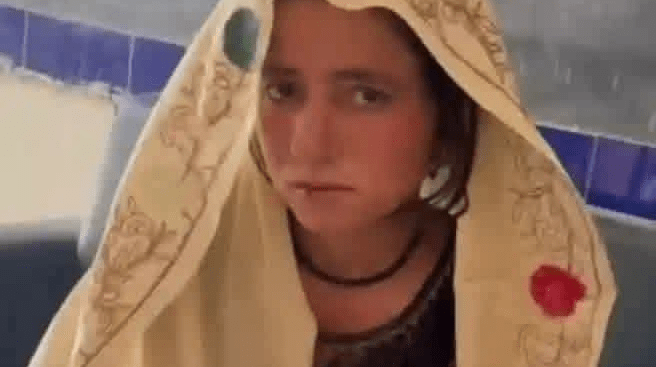
She had already survived once.
That should have meant something.
Gulaan Buharo, a young mother of two, had done what many women are never able to do—she spoke up. She ran from violence. She sought protection. She told the truth, not just to her family, but before a court of law. She named the man she feared most—her husband—and made it clear that her life was in danger.
And still, it wasn’t enough.
In Sukkur district, her story has ended the way too many stories like hers do: in silence, in grief, and in questions no one seems able—or willing—to answer.
Months before her death, Gulaan had reportedly survived an attempt on her life. The alleged attacker was her husband, Moula Bux Buharo. She fled, carrying not just her fear but her determination to live. The state intervened, placing her in a shelter home—a rare, fragile space meant to offer safety to women like her.
There, perhaps, she found temporary relief. But not belonging.
On April 24, after recording her statement in court, she made a choice that speaks volumes about the quiet emotional realities behind such cases. She chose to return to her parents’ home. In her testimony, she was clear and unwavering: she feared her husband, she did not want to go back to him, and she wished to remain under her father’s protection.
Her father, Imdad Buharo, assured authorities he would keep her safe.
It is a promise that now echoes with unbearable weight.
A video recorded earlier at Jhangru police station showed visible injuries on Gulaan’s face and hands—marks of violence she had already endured. They were not hidden. They were documented. Seen. Acknowledged.
And yet, they could not save her.
On Sunday, her body was recovered.
By Monday, it had been shifted to Rohri taluka hospital. A life reduced to a case file. A mother reduced to a statistic. A warning that went unheard.
Police have since taken her husband into custody, but as of the time this report was filed, no FIR had been registered. The delay only deepens the unease surrounding her death.
Because Gulaan’s story is not just about one woman. It is about a system that responded—but not enough. A network of protection that existed—but did not hold. A cycle of violence that continues to claim lives, even when the victims do everything they are told to do to survive.
She sought help. She was heard. She was seen.
And still, she died.
Now, her two children are left behind, growing up in the shadow of a tragedy that should never have happened. And a question remains, heavy and unresolved:
What does protection truly mean if it cannot protect?