
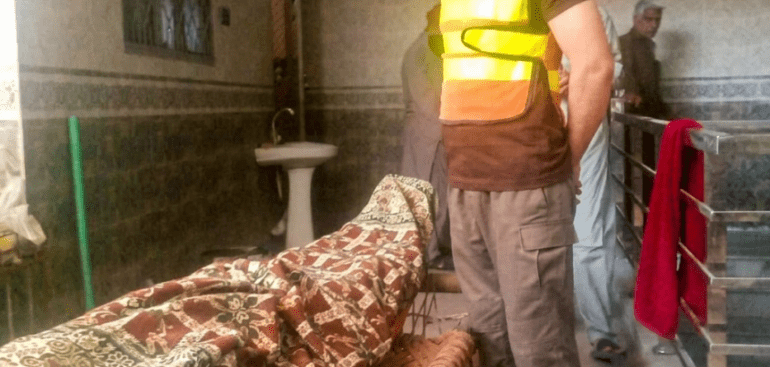
The killing of Jagannath and Asa Wanti inside a gurudwara in Mardan is not just another tragic headline—it is a moral indictment of a state that continues to fail its most vulnerable citizens. On June 17, an elderly Sikh couple, both around 70 years old, were shot dead inside a place they had devoted their lives to protecting. For over two decades, they served quietly as caretakers of the gurudwara, living within its walls, safeguarding its sanctity. There was no robbery, no known personal dispute, no warning—only gunfire tearing through a sacred space, followed by silence as the attackers fled without consequence.
This was not merely an attack on two individuals; it was an attack on the fragile promise of safety for religious minorities in Pakistan. Authorities have described it as a “targeted attack,” but such language has become routine, almost mechanical, in the face of repeated violence. What remains unchanged is the pattern: minority victims, unguarded religious spaces, unidentified assailants, and investigations that rarely deliver justice. From Peshawar in 2022 to Mardan today, the cycle continues with alarming predictability.
Local residents speak of harmony, of decades of peaceful coexistence between communities of different faiths. That may be true, and it makes this tragedy even more disturbing. Because when violence breaches even the most peaceful spaces, it exposes not just individual hatred but systemic failure. A functioning state does not wait for minorities to be killed before acting—it ensures their protection long before violence occurs. The absence of security at a known religious site, the ease with which attackers entered and escaped, and the lack of immediate accountability all point toward negligence that cannot be ignored.
The response from authorities has followed a familiar script: police visits, official statements, promises of investigation. Yet these actions, repeated after every such incident, have done little to change outcomes. Pakistan’s obligations under international human rights frameworks are clear—it must ensure the safety, dignity, and religious freedom of all its citizens. But these commitments lose meaning when minorities continue to be targeted while perpetrators operate with apparent impunity.
Jagannath and Asa Wanti were not political figures or controversial voices. They were caretakers, devoted to faith and service, living a quiet life within the walls of a gurudwara. Their deaths highlight a painful truth: even those who seek no conflict, who contribute to community harmony, are not beyond the reach of violence. When such individuals are killed, and justice remains uncertain, responsibility cannot rest solely on the attackers. It extends to the structures that failed to protect them.
This incident cannot be dismissed as isolated. It fits into a broader and deeply troubling pattern of violence against minorities in Pakistan. Each repetition reinforces fear, erodes trust, and sends a dangerous message—that some lives are less protected than others. Until the state confronts this reality with genuine accountability and concrete action, every promise of protection will remain hollow, and every place of worship will continue to stand vulnerable.