
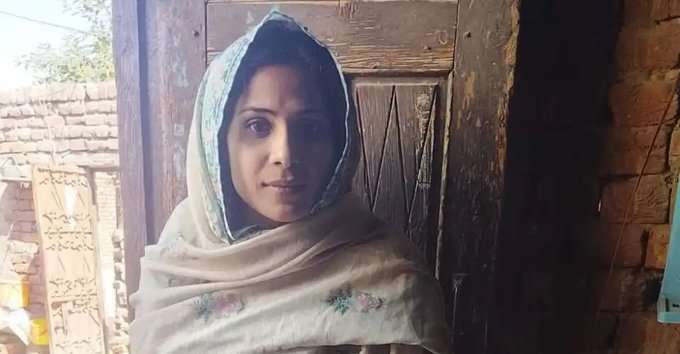
On a day meant for joy and redemption, Easter Sunday turned into one of terror for a Christian family in Pakistan. The hymns and prayers were still echoing through the village air when police arrested a Muslim man accused of threatening to kill a young Christian woman if she refused to convert to Islam and marry him.
In Chak 6/11-L village near Harappa, Sahiwal District, 20-year-old Laiba Javed had come home to celebrate Easter—a moment of faith and family. But instead of peace, she received a chilling letter from Rehman Irfan, a former schoolmate. The note, written in his own hand, demanded she convert to Islam and marry him by April 15—or face death.
Her uncle Imran Masih recounted the horror: Irfan arrived at their home with two armed men. When Laiba was alone, he handed her the letter at gunpoint, proclaiming his “love” and that he would stop at nothing to marry her after forcing her conversion. “She was terrified,” Masih said, his voice trembling. “We never imagined Easter would become a day of fear.”
Laiba alerted her family, and they rushed to the police station. Initially, officers advised restraint, saying it was Easter—a time of peace. But peace was shattered quickly when one of Irfan’s relatives disrupted an Easter sunrise procession. This time, the family’s pleas were met with action. Police raided the suspect’s cousin’s house, finding Irfan there and taking him into custody.
Still, the family’s relief is fragile. “He’s been booked for issuing threats,” Masih said, “but we fear he could be released on bail. If that happens, our lives won’t be safe.”
Laiba has since fled the village. Her father, a poor farm laborer, stays behind under the shadow of fear. Her mother died years ago, leaving a void now filled with dread. For Laiba, even home no longer feels like home.
Punjab Assembly member Ejaz Alam Augustine, formerly minister for human rights and minority affairs, condemned how weak enforcement of laws keeps emboldening predators who target girls from religious minorities. He pointed to a disturbing February court ruling that legitimized the marriage of a 13-year-old Christian girl, Maria Shahbaz, to her alleged abductor, an adult Muslim man. “This judgment has created a sense of impunity,” Augustine said gravely. “Now it feels like no Christian girl is truly safe.”
Rights groups echo this worry. In Pakistan—where nearly 96 percent of citizens are Muslim—girls from minorities live in constant fear of abduction, forced conversion, and coerced marriage. A study by the Center for Social Justice found 515 cases between 2021 and 2025. Most victims were children—many no older than Laiba, some even younger than 14. Hindu girls made up over two-thirds of the cases, and Christian girls nearly one-third.
Behind each figure is a story like Laiba’s: a stolen childhood, a silenced voice, a family torn between faith and survival.
On Easter—a day that should have been filled with hope—Laiba and her family were reminded that in parts of Pakistan, faith itself can be a dangerous thing to hold.