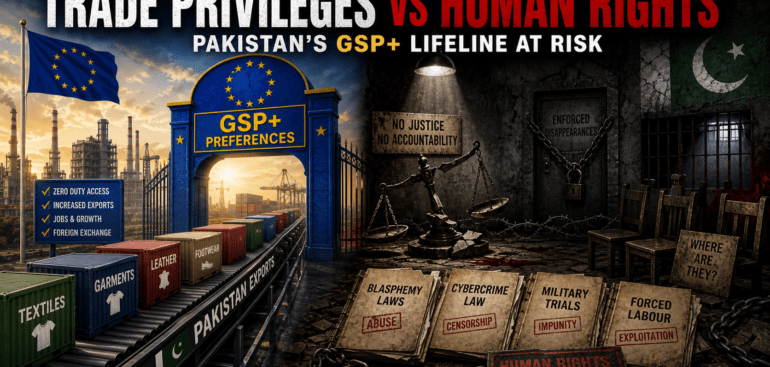
Pakistan is cashing in on the EU’s GSP+ trade concessions while it fails to honour the core human rights and governance obligations that justify those benefits. Atrocities, discrimination and violence continue at home, yet Pakistan still presents itself as a compliant partner on paper.
Since 2014, Pakistan has relied on the EU’s GSP+ scheme as a key pillar of its export strategy. It sends billions of euros’ worth of goods to Europe every year, mainly textiles and garments, under generous preferential tariffs. In 2024 alone, Pakistan secured hundreds of millions of euros in tariff exemptions, turning GSP+ into a vital economic lifeline. The EU designed this arrangement as a “special incentive” for sustainable development and good governance, tied to the effective implementation of 27 international conventions. Pakistan enjoys the trade benefits, but it does not deliver matching progress where it matters most—on the ground.
The latest EU monitoring assessment openly criticises Pakistan’s performance. It notes that Pakistan has adopted new laws and created institutions, yet most of this progress remains legislative and administrative. Authorities establish a National Commission for Human Rights and a National Commission for Minorities, narrow the scope of the death penalty, and pass anti-torture rules. However, citizens, especially vulnerable communities- minorities still do not feel these changes in their daily lives. The state keeps security agencies and powerful actors shielded from real accountability, and violations persist.
Religious minorities sit at the sharp edge of this failure. Christians, Ahmadis, Hindus and other communities continue to face entrenched discrimination, legal harassment and social violence. Blasphemy provisions and vague cybercrime and “hate speech” laws give both the state and vigilante groups broad tools to target minorities, dissidents and human rights defenders. These laws can lead to imprisonment, loss of property and restrictions on travel simply for speech or belief. Instead of protecting freedom of religion and expression, Pakistan’s legal framework deepens fear among those who do not fit the majority mould.
Beyond religious persecution, the report highlights worsening patterns of violence and coercion. Enforced disappearances and extrajudicial killings are increasing, particularly in Balochistan and Khyber Pakhtunkhwa. Families demand answers; the authorities do not provide them. The Commission of Inquiry on Enforced Disappearances fails to secure accountability or credible prosecutions. Political opponents, activists and critics face detention and harsh treatment, including military trials that do not meet international standards of fair and public hearings.
Workers, children and refugees also pay the price of weak enforcement. Pakistan signs labour conventions and ratifies the Forced Labour Protocol, but large numbers of workers still suffer forced labour and exploitative conditions. Child labour declines only slowly despite new plans and inspections. Violence against women and children, overcrowded prisons, high numbers of out-of-school children and reports of harsh treatment of Afghan refugees all show how far practice lags behind Pakistan’s formal commitments. The state talks about social protection and reforms, yet basic rights remain insecure.
Despite this record, Pakistan still treats GSP+ as guaranteed. Exporters continue to enjoy high utilisation of preferences; the state highlights the economic gains but sidesteps the human cost. The EU’s new GSP framework, coming into effect in 2027, changes that equation. It introduces more stringent sustainability and governance conditions and requires all existing beneficiaries to reapply. For Pakistan, this means it can no longer rely on legislation alone or cosmetic institutional changes.
If Pakistan wants to retain GSP+ under the new rules, it must finally act where it has so far refused: it must protect religious minorities in practice, criminalise and end enforced disappearances, curb abusive laws and ensure that fundamental rights are respected. Otherwise, it risks losing the trade privileges it has enjoyed for years while doing little to stop the ongoing violations committed against its most vulnerable citizens.