
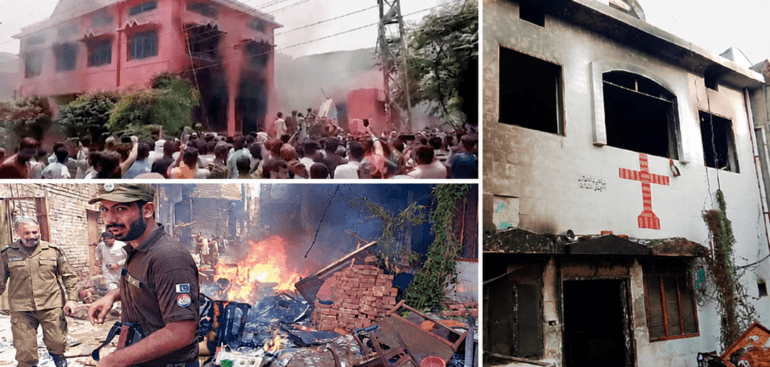
Three years have passed since the Jaranwala tragedy, but Pakistan’s Christian community still carries its pain. The fires that destroyed homes and churches on 16 August 2023 may have been extinguished, yet the fear, trauma, and insecurity remain alive in the hearts of survivors.
On 16 August this year, Christians, church leaders, human-rights advocates, and members of civil society gathered to remember the victims. They did not gather to spread anger or division. They gathered peacefully to demand something every Pakistani deserves: justice, security, dignity, and equal citizenship.
The violence in Jaranwala began after blasphemy allegations against two Christian brothers. Before any proper investigation could establish the truth, mobs took to the streets. They attacked Christian neighbourhoods, set churches on fire, damaged homes, and forced families to flee in fear.
The scale of destruction shocked the country. At least 26 churches and hundreds of Christian homes were reportedly attacked. Families lost property, savings, documents, and places of worship. More importantly, many lost their sense of safety in the country they call home.
A home can be rebuilt. A church building can be repaired. But who will repair the fear of a child who watched flames consume their neighbourhood? Who will erase the memory of families running for safety while mobs shouted outside their streets?
This is why Jaranwala is not only a story of damaged buildings. It is a story of deep emotional wounds. It is a story of a minority community asking whether the state will protect them when they needed the most.
Justice cannot remain limited to speeches, announcements, compensation promises, or temporary visits by officials. Justice requires transparent investigations. It requires credible evidence collection. It requires the prosecution of those who incited, organized, and carried out violence. It also requires protection for victims and witnesses who may fear retaliation.
The authorities must investigate not only those who physically attacked churches and homes, but also those who spread hatred and mobilized violence. Anyone who uses a mosque loudspeaker, social media, or public platform to incite attacks against innocent citizens must face the law. Religious influence must never become a licence for violence.
Pakistan’s Christians do not seek special treatment. They seek equal treatment. They want the same right to live safely, worship freely, raise their children without fear, and receive justice when criminals attack them.
The tragedy also exposed the danger of false blasphemy accusations. Such allegations can spread rapidly and trigger violence before police or courts have the chance to determine the facts. When a mere accusation can place an entire community at risk, the system has failed to protect its citizens.
Pakistan needs stronger safeguards against false accusations, mob violence, hate speech, and religious incitement. Police must act early, not after mobs have already destroyed communities. Officers must protect vulnerable citizens without fear or bias. Courts must ensure that justice does not disappear because of weak investigations, missing evidence, or political pressure.
The country also needs a serious national effort against radicalisation. Political leaders, religious scholars, teachers, police officers, and civil-society groups all have a responsibility to reject hatred. No faith can justify burning a neighbour’s home. No religious slogan can justify attacking a place of worship. No accusation should replace due process.
Three years after Jaranwala, the most painful question remains unanswered: when will the victims receive justice?
Time does not heal injustice when authorities allow impunity to continue. Every delay sends a dangerous message to those who believe they can target minorities without consequence. Every failure to prosecute makes another attack more likely.
The Christian community has shown remarkable resilience. It continues to worship, rebuild, speak peacefully, and demand its rights. Pakistan must now respond with more than sympathy.
It must respond with justice.