
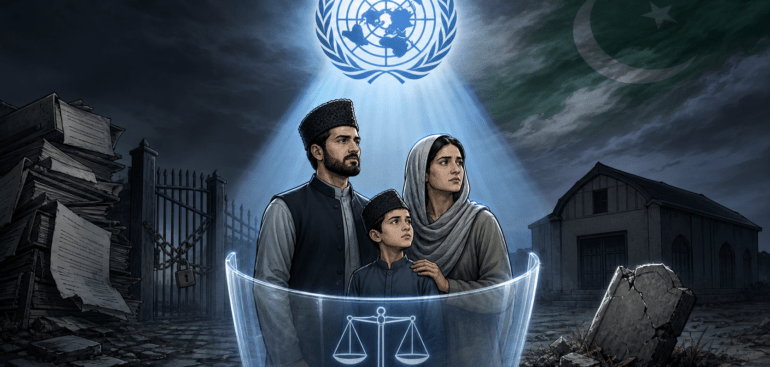
UN human rights experts have told Pakistan to stop persecuting the Ahmadiyya community and protect their right to practise their faith. In a statement on 8 September 2026, they said they are deeply worried about ongoing discrimination, violence, and harsh laws that target Ahmadis simply for who they are. They warned that Pakistan must meet its international human rights duties and end the climate of fear that surrounds this minority.
The experts said Ahmadis still face harassment, criminal cases, attacks, and social exclusion because of their religious identity. They pointed to repeated reports of assaults on Ahmadi mosques and community centres, damage to graves, and interference with peaceful worship, including during Eid-ul-Fitr and Eid-ul-Adha. They also highlighted arrests, surveillance, and prosecutions linked to religious practices, as well as hate speech that encourages hostility against the community. Recent Eid-related incidents show that this discrimination even enters people’s homes, with individuals facing detention or charges just for observing religious festivals in private.
This persecution is backed by law. Pakistan’s Parliament declared Ahmadis non-Muslims in 1974, and in 1984 it passed Ordinance XX, which criminalises many normal acts of Ahmadi faith. Under sections 298-B and 298-C of the penal code, Ahmadis can be jailed for up to three years and fined for using Islamic terms, calling their places of worship “mosques,” or “posing” as Muslims. Rights groups say these laws turn everyday worship into a crime and help create a system where violence against Ahmadis is common and attackers often go unpunished. A 2026 UN report also noted serious abuses around burial rights, including grave desecration and blocked funerals.
The experts set out clear steps for Pakistan. They want the government to guarantee equal protection under the law for everyone, without religious discrimination. They urge Pakistan to review and change laws and policies that clash with international human rights standards on freedom of religion, expression, association, assembly, and equality. They also call on the state to act with due diligence: prevent violations, investigate complaints quickly and fairly, prosecute those responsible, and give real remedies to victims. At the same time, they say Pakistan must work to reduce hate speech and build a society where all religious communities can live safely and with dignity. The experts added that they are in contact with the government and remain ready to support reforms that protect religious minorities.
At its heart, this is a moral appeal. The experts stressed that every person has the right to freedom of thought, conscience, religion, or belief, and that no one should face discrimination, intimidation, or violence for their faith. They argued that fighting religious intolerance means more than reacting to single incidents. It requires steady efforts to respect diversity, stop incitement to hatred, and end the fear that allows persecution to continue. For Ahmadis in Pakistan, the question remains urgent: when will the state treat them as full citizens instead of treating their faith as a crime?