A chilling investigation by BBC World Service has cast a harsh light on a tragedy that continues to unfold in silence — one where the most vulnerable, children, may have paid the price for systemic failure. The documentary Stolen Lives: Who Gave Our Children HIV? lays bare allegations of grave malpractice at the children’s ward of a government hospital in Punjab, raising unsettling questions about accountability, negligence, and the value of human life.
The crisis traces back to early last year, when an alarming number of children in Taunsa tested positive for HIV. The Tehsil Headquarters (THQ) Hospital quickly came under scrutiny as doctors in nearby private clinics began noticing a disturbing pattern: many of the infected children had received treatment there. Suspicion grew around unsafe injection practices — whispers of reused syringes and contaminated equipment began to circulate among terrified parents.
Families spoke of horror that no parent should ever endure. They described how syringes, still tainted with blood, were allegedly used on multiple children. The scale of the tragedy soon became undeniable. Authorities confirmed that at least 106 children had been infected and promised swift action. In March, the hospital’s Medical Superintendent was suspended, and officials vowed a “massive crackdown.”
But for many, those promises now ring hollow.
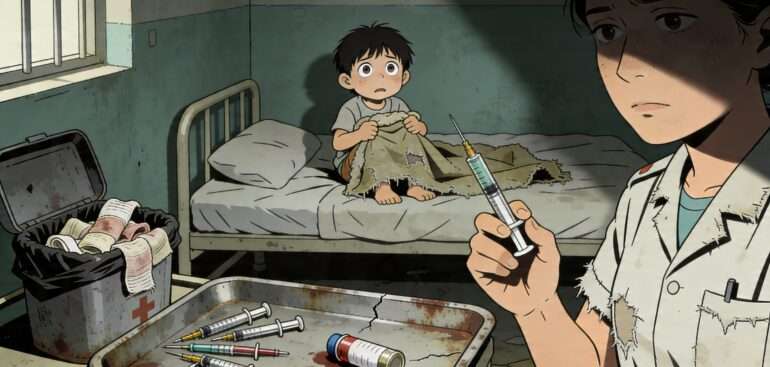
Months after the supposed reforms, an insider claimed that little had changed. Acting on this tip, BBC Eye Investigations went undercover inside the hospital’s children’s ward. What their hidden cameras captured was deeply disturbing. Over several weeks, footage appeared to show nurses administering injections through clothing, distributing used syringes for reuse, and allowing untrained individuals to inject children using potentially contaminated vials.
The scenes pointed not to isolated lapses, but to a pattern of systemic neglect. Basic infection control — the most fundamental safeguard in healthcare — seemed routinely ignored. Used needles lay exposed. Medical waste was handled with bare hands. Each frame told a story of risk, of carelessness, and of lives placed in danger.
The consequences have been devastating. According to the documentary, at least 331 children in Taunsa tested positive for HIV between November 2024 and October the following year. Infectious disease expert Dr. Altaf Ahmed, after reviewing the footage, confirmed that such practices carry a high risk of transmitting HIV.
Yet even in the face of such evidence, accountability remains contested. The hospital’s current Medical Superintendent, Dr. Qasim Buzdar, initially dismissed the footage, suggesting it predated his tenure — and later claimed it might have been staged. He maintained that infection prevention protocols are being followed.
Meanwhile, families continue to live a reality far removed from official assurances.
Ghazal Abbasi, the journalist leading the documentary, brings their voices to the forefront — voices weighed down by grief, fear, and stigma. Some parents have already buried their children. Others watch helplessly as illness slowly consumes them.
Among them was eight-year-old Mohammed Amin. Diagnosed in late 2025, he died before treatment could save him. Just weeks later, his 10-year-old sister, Asma, was also diagnosed. Both had received injections at the same hospital.
Asma now survives on medication, but her struggle extends beyond the physical. In her community, she faces isolation and rejection. Neighbours keep their children away. Playgrounds have become places of exclusion. Her innocent question — “What is wrong with me?” — echoes a deeper injustice, one that no child should ever have to confront.
Her story is not just about disease. It is about dignity, about the silent cruelty of stigma, and about a system that may have failed to protect her.
In response to the BBC report, the Punjab Health Department defended its actions. Officials stated that extensive measures were taken after initial cases emerged, including collaboration with international organisations like WHO, UNICEF, and UNAIDS. A large-scale screening campaign covering 50,000 people identified 334 HIV-positive cases, most of them children. A dedicated screening and treatment centre was also established at the Taunsa hospital.
However, the department criticised the documentary for allegedly omitting these efforts, accusing it of creating unnecessary fear and public panic.
But for affected families, the debate over narratives offers little comfort. Their reality is measured not in reports or rebuttals, but in hospital visits, daily medication, and the quiet heartbreak of watching a child’s future shrink.
This is not just a story about a hospital or a single outbreak. It is a stark reminder of what happens when systems meant to heal instead harm, when oversight fails, and when the voiceless are left unheard.
At its core, Stolen Lives forces a difficult question into the open: when children’s lives are altered forever, who takes responsibility — and will justice ever follow?